The June 2026 Klue incident was a SaaS supply-chain compromise, not a breach of the LastPass password-vault infrastructure. An unauthorised actor obtained OAuth tokens held by Klue, a market-intelligence provider, and used the token associated with LastPass to reach customer information in LastPass’s Salesforce environment.
That distinction matters. A third-party integration can expose valuable data without an attacker signing in through the customer-facing product or stealing an employee’s password. The token is already an authorisation grant. If it is copied and remains valid, the attacker may be able to call the connected service with the permissions previously granted to the vendor.
What LastPass Confirmed
According to the company’s official incident response, LastPass learned of the Klue incident on June 12, 2026. Klue integrated with the company’s Salesforce and Gong systems, and the actor obtained OAuth tokens that Klue held for multiple customers.
LastPass said the actor used the exposed credential to access standard business contact and CRM information, including customer names, phone numbers, email and physical addresses, support-case data, and sales-related data. It reported no evidence of access to Gong data.
The company also said that LastPass products, services, infrastructure, and customer vaults were not affected. That means the public evidence does not support claims that vault passwords or master passwords were stolen in this incident. The affected CRM information is nevertheless useful for targeted phishing and social engineering because it helps an attacker sound informed and credible.
LastPass reported that it discontinued employee access to Klue, rotated the exposed access tokens, investigated with Klue and Salesforce, notified law enforcement, and continued sharing threat information with the security community.
The Attack Path
The known chain can be expressed without speculation:
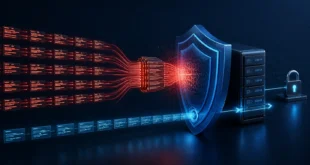
- An organisation authorises a third-party SaaS application to access selected business systems.
- The vendor stores OAuth tokens needed to operate the integration.
- An actor compromises the vendor and obtains tokens for multiple customers.
- A stolen customer token is presented to the connected SaaS platform.
- The platform accepts the still-valid grant and exposes data permitted by its scopes and the connected identity.
OAuth did not “fail” cryptographically. The security boundary failed around the token and the third-party integration. OAuth tokens should be treated like credentials because possession can be sufficient for access.
Public reporting does not establish every detail of initial access to Klue, token storage, persistence, or the complete set of affected companies. Those unknowns should remain unknown rather than being filled with an assumed exploit or threat group.
Why CRM Exposure Is Security-Relevant
CRM records combine identity, relationship, and context. A message that names a recent support topic, account contact, sales discussion, address, or phone number can bypass the recipient’s normal suspicion. An actor may impersonate support, claim an urgent account problem, or call an employee while referring to real organisational details.
For a password-management customer, the most dangerous follow-on request would be a master password, MFA code, recovery data, remote-control session, or approval of an unexpected login. LastPass states that its personnel will not ask for a master password. Users should navigate to known support channels independently instead of following unsolicited links or phone instructions.
Changing every vault password is not an evidence-based response when the vault was not affected. More useful actions are heightened phishing awareness, review of support interactions, protection of email and phone accounts, and prompt investigation of unexpected LastPass-themed contact.
Inventory Integrations as Privileged Access
Many organisations maintain user accounts but do not maintain an equivalent register of SaaS applications. A useful integration inventory records:
- application owner and vendor;
- connected tenant and authorising identity;
- exact OAuth scopes;
- data categories and business purpose;
- token type, lifetime, and rotation method;
- last use and audit-log source;
- contractual incident-notification requirements;
- revocation and offboarding procedure.
An integration with broad CRM read access is a privileged identity even when it has no mailbox and never appears in an HR report. It needs an owner, periodic review, monitoring, and a removal date.
Reduce the Blast Radius
Grant the smallest scopes that satisfy the integration. Avoid tenant-wide permissions when a dedicated dataset, object type, or service account is sufficient. Separate production from test connections, prohibit shared administrator consent, and require a documented review for high-impact scopes.
Where the platform supports it, use short-lived tokens, refresh-token rotation, conditional access, workload identity controls, IP or network restrictions, and alerts for unusual API behaviour. These controls are not interchangeable: a long-lived token stored securely can still be dangerous after vendor compromise, while a short-lived token paired with an exposed refresh grant may remain renewable.
Audit both sides. Customer-side SaaS logs can reveal calls made with the integration identity, while vendor-side evidence explains how tokens were handled. Contractual access to incident details and log retention is part of technical resilience, not merely procurement paperwork.
Respond to a Compromised SaaS Connector
First disable or revoke the integration through the connected platform. Rotating a client secret alone may not invalidate already issued access or refresh tokens. Confirm the platform’s revocation semantics, terminate active sessions where applicable, and reauthorise only after the vendor is trusted again.
Then preserve audit logs, determine the scopes and identities involved, establish the accessible time window, and identify which records were read or exported. Review downstream automations because one SaaS connection may trigger others. Notify affected people with precise facts and warnings that match the exposed information.
Before reconnecting, narrow scopes, choose a dedicated identity, set monitoring, document the owner, and test revocation. If the integration is no longer essential, do not restore it simply because it existed before the incident.
The Klue–LastPass event shows why supply-chain security extends beyond software packages. A marketing or intelligence platform connected by OAuth can become a path into business data. The practical defence is to manage every integration as credentialed access and to make revocation, evidence collection, and least privilege routine before a supplier incident occurs.